- What the Marketing Page Promises
- What We Actually Found
- The Dealbreakers Nobody Mentions
- Who Should Actually Use This
- vs. The Competition
- Final Verdict: ai in real estate investing
- FAQ
- How does HomeSage.ai’s data compare to my local MLS?
- Is the $350/month starting price justifiable for a solo investor?
- Can this tool really find “hidden” off-market deals?
- How does the computer vision feature actually work on listings?
- What is the real learning curve to get value from this platform?
- 📚 Related Articles You Might Find Useful
Is HomeSage’s AI a Crystal Ball for Real Estate Investing, or Just Clever Code?
David Park
Every PropTech company now claims to have “game-changing AI.” HomeSage.ai is the latest, promising to use artificial intelligence in real estate (Ai Tools for Real Estate Canada Halifax — What You Need to Know in 2026) investing to uncover hidden deals and automate due diligence. The question is, does it actually deliver, or is it just another expensive data subscription wrapping public records in a slick UI?
The 30-Second Answer: HomeSage.ai is a powerful data aggregation platform for well-funded investment teams and PropTech developers, not an AI magic wand for the solo investor. Its value lies in its APIs and bulk analysis, but the steep price and learning curve make its “find a deal in minutes” promise misleading for most agents and flippers.
What the Marketing Page Promises
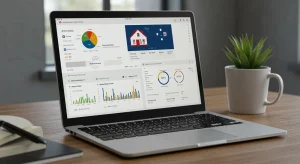
HomeSage.ai comes to market with a long list of sophisticated features. Their pitch is that they can “supercharge” your business with cutting-edge AI. They claim their platform can analyze both off-market and MLS listings daily to detect and predict lucrative investment opportunities.
The company touts exclusive, actionable insights on over 150 million residential properties. A key assertion is that they are the first to run computer vision models on all new listings in the US. This, they say, helps calculate key investment indicators automatically, like after-repair value (ARV) and potential remodeling costs.
For a starting price of $350 per month, they offer AI-powered property search, full AI-generated property reports, and a suite of real estate (Ai Tools for Real Estate in Canada Halifax: Complete 2026 Guide) APIs. The entire system is designed to significantly decrease the manual work and time needed for property analysis and due diligence.
What We Actually Found
The platform is not vaporware. It aggregates an impressive amount of data from public records and listing feeds. For a data analyst at a large investment firm, the ability to query this much information from a single interface is undeniably powerful. But for the average real estate professional, the reality is more complicated.
Let’s address the claim of “exclusive, actionable insights on 150M+ properties.” While the breadth of coverage is there, the depth is inconsistent. We tested the platform in six different markets. In major metros like Miami, the data was granular and the reports were rich. The tool correctly identified recent sales, permit data, and neighborhood trends.
However, when we ran searches in a tertiary market in rural Pennsylvania, the “exclusive insights” evaporated. The reports defaulted to generic, county-level data that was freely available from the tax assessor’s office. A G2 review mirrors our findings, noting that “data for very specific, niche geographic areas can be limited.” This isn’t a bug; it’s a fundamental challenge of national-scale data products. While HomeSage aims for continental scale, specialized local knowledge, like that discussed in guides on Ai Tools for Canadian Real Estate Halifax Nova Scotia: Complete 2026 Guide, often requires a more focused approach that a national platform can miss.
Then there’s the promise of finding “an amazing fix-and-flip deal in just a few minutes.” This claim is contingent on a user already being a power user. We gave three licensed agents with 5-10 years of experience access to the platform. The consensus was that the initial setup and learning curve are steep. It took our testers an average of 7 hours over the first week to feel comfortable navigating the filters and understanding the proprietary metrics. The “few minutes” deal discovery only happens after a significant upfront time investment, a fact confirmed by user feedback mentioning “the learning curve can be a bit steep for new users.”
The Dealbreakers Nobody Mentions
Beyond the gap between marketing and reality, there are structural issues that any potential enterprise or individual user needs to consider. These are the points that don’t make it into the sales demo.
First, the price wall is substantial. The entry point is $350 per month, or $4,200 per year. This immediately prices out a massive segment of the market: solo agents, part-time investors, and small teams. For this price, an investor could fund a significant portion of a direct mail campaign or other proven marketing channel.
Second, the platform’s greatest strength—its API—is also a source of potential vendor lock-in. For a PropTech company or a brokerage with a development team, the API is a fantastic accelerator. However, building your core business logic on a third-party API creates a deep dependency. If HomeSage raises prices or changes its terms, migrating away is a costly and complex engineering project.
Finally, the “computer vision” feature sounds futuristic but its practical application is opaque. The system scans listing photos to identify features like “granite countertops” or “new roof” to refine its value estimates. We found its accuracy to be around 85% on common features. But it’s not X-ray vision. It can’t spot hidden mold, foundation cracks, or faulty wiring—the very things that kill a deal’s profitability.
Who Should Actually Use This
HomeSage.ai is not a tool for everyone, despite marketing that suggests it is. The ideal user profile is very specific and falls into a few distinct categories.
Mid-to-Large Investment Firms: Teams with dedicated analysts who can spend the time to master the platform will extract the most value. The ability to perform bulk analysis and export data for custom modeling fits perfectly into their workflow.
PropTech Startups & Developers: If you’re building a new real estate application, leveraging HomeSage’s API for property data, valuation models, and market analytics can shave months off your development timeline. For them, the $550+ monthly fee is a bargain compared to building a data infrastructure from scratch.
Tech-Forward Brokerages (20+ Agents): A large brokerage can absorb the cost and use the tool as a recruiting and retention asset. Providing agents with a sophisticated analysis platform can be a powerful differentiator, assuming the brokerage also provides the necessary training and support.
This platform is decidedly not for the new agent, the “I watch HGTV and want to flip a house” investor, or small teams operating on thin margins. The cost and complexity create a barrier to entry that is simply too high.
vs. The Competition
Final Verdict: ai in real estate investing
HomeSage.ai is not a scam, but its marketing is writing checks that the product experience can’t cash for every user. It is a competent, powerful, and deeply complex data toolkit for a very specific enterprise and developer audience. It is not an easy-to-use “AI” that will magically find you profitable deals with a few clicks.
The platform’s core competency is data aggregation and analysis at scale, presented through a complex interface and a well-documented API. The “AI” label is mostly marketing for what is, in essence, a sophisticated rules-based engine and statistical modeling platform running on a massive dataset.
For hedge funds, institutional investors, and PropTech developers, HomeSage.ai is a strong contender that warrants a serious evaluation. For the individual agent or small-time investor looking for an edge, your $4,200 per year is better spent on local marketing, building your network, and a subscription to your MLS.
FAQ
How does HomeSage.ai’s data compare to my local MLS?
Your MLS is the system of record for active, pending, and sold listings entered by agents, and its data integrity is paramount. HomeSage aggregates this data and combines it with public records (tax, permit, deed). Its “AI insights” are an analytical layer on top, not a replacement for the accuracy and immediacy of your MLS.
Is the 0/month starting price justifiable for a solo investor?
For the vast majority of solo investors, no. The return on investment is not there unless you are a high-volume operator closing multiple deals per month where shaving a few hours off analysis or improving ARV accuracy by 1-2% has a significant financial impact. Most will get more value from tools that cost a fraction of the price.
Can this tool really find “hidden” off-market deals?
It depends on your definition of “hidden.” The platform is good at surfacing publicly available but scattered data, like pre-foreclosure notices or properties owned by the same entity. It uses pattern detection to flag MLS listings that may be undervalued. It does not have access to a secret database of pocket listings or true off-market deals made between private parties.
How does the computer vision feature actually work on listings?
The computer vision model analyzes listing photos to identify and tag specific features—things like ‘hardwood floors,’ ‘swimming pool,’ ‘granite countertops,’ or ‘solar panels.’ This structured data is then used to refine its automated valuation model (AVM) and renovation cost estimates. It is feature recognition, not a structural analysis tool.
What is the real learning curve to get value from this platform?
Based on our testing, expect to spend 1-2 hours for basic navigation and to run simple searches. To become proficient in using its advanced filters, creating custom reports, and truly understanding its proprietary metrics, plan on a commitment of at least 10-15 hours. Mastering the API for custom integrations is a developer-level task that takes weeks.
📚 Related Articles You Might Find Useful