
- Access & Digestibility
- Core Features Deep Dive
- Pricing Analysis
- Real Estate Use Cases
- What Real Users Are Saying
- Strengths
- Weaknesses
- FAQ
- Is the McKinsey generative AI real estate value of $110-$180 billion realistic for my brokerage?
- I’ve read the report. What’s the first practical step I should take?
- Does the report recommend specific AI software or tools for real estate?
- How does this report apply to a solo agent versus a large, multi-state firm?
- What is the biggest risk or challenge the report highlights for real estate?
- 📚 Related Articles You Might Find Useful
Transparency Statement: This is an analysis of a publicly available economic report by McKinsey & Company, not a review of a software product. I have no affiliation with McKinsey. My evaluation focuses on translating their high-level economic data into practical insights for real estate brokerages, MLSs, and agents.
Access & Digestibility
There is no signup. This is not a SaaS tool you subscribe to. It’s a comprehensive, 68-page report available for download from McKinsey’s website. Accessing the PDF is instant after providing some basic information.
Be prepared. This is not a light read. The document is dense with economic modeling, corporate jargon, and data visualizations. A real estate (Ai Tools for Real Estate Canada Halifax — What You Need to Know in 2026) professional will need to set aside several hours to read and, more importantly, digest its implications. It’s written for strategists and executives, not for an agent between showings.
The key real estate (Ai Tools for Real Estate in Canada Halifax: Complete 2026 Guide) figures are spread throughout the broader analysis of the global economy. You have to work to extract the real estate-specific insights. The estimated time to read and identify the core real estate takeaways is approximately 90-120 minutes for a focused reader.
The report’s structure is logical, breaking down generative AI’s impact across 16 business functions. However, this requires the reader to mentally map these functions back to their own real estate operations, which demands a high level of business acumen.
Core Features Deep Dive
The “features” of this report are its data-driven insights. It’s a strategic blueprint that helps leaders understand the scale of the opportunity. The core assertion is the McKinsey generative AI real estate value of $110 billion to $180 billion in potential annual productivity gains.
This value isn’t from some magic AI button. The report specifies it comes from four key business areas where generative AI can augment or automate tasks. For real estate, this translates directly to brokerage and property management operations.
1. Marketing & Sales: McKinsey projects massive gains here. This is about more than writing listing descriptions. It includes hyper-personalized outreach campaigns, dynamic ad creative generation, and AI-driven lead nurturing that adapts to client behavior in real time. The report suggests AI can analyze CRM data to predict which past clients are likely to move, prompting proactive agent outreach.
2. Customer Operations: This is your brokerage’s front and back line. Think AI-powered chatbots handling tenant maintenance requests 24/7 or answering common buyer questions instantly. It also covers automating the scheduling of showings and follow-ups, freeing up immense agent and admin time. The value is in scalability and improved client satisfaction.
3. Software Engineering & IT: For larger brokerages and MLSs, this is significant. The report highlights generative AI’s ability to help developers write, document, and test code faster. This could accelerate the development of proprietary CRM features, agent portals, or data analytics dashboards. It means building the tools your business needs, faster and cheaper.
4. Product R&D (Design & Development): This area has huge implications for developers and commercial real estate. The report’s findings apply to using AI to generate architectural floor plans that optimize space, run simulations for energy efficiency, or create realistic virtual renderings for marketing pre-construction projects. The productivity gains are measured in weeks and months shaved off project timelines.
Pricing Analysis
The McKinsey report is free to download. The “price” is not in dollars but in the intellectual effort to understand it and the capital required to act on its findings. The cost of inaction, as the report implies, could be market-share erosion over the next 5-10 years.
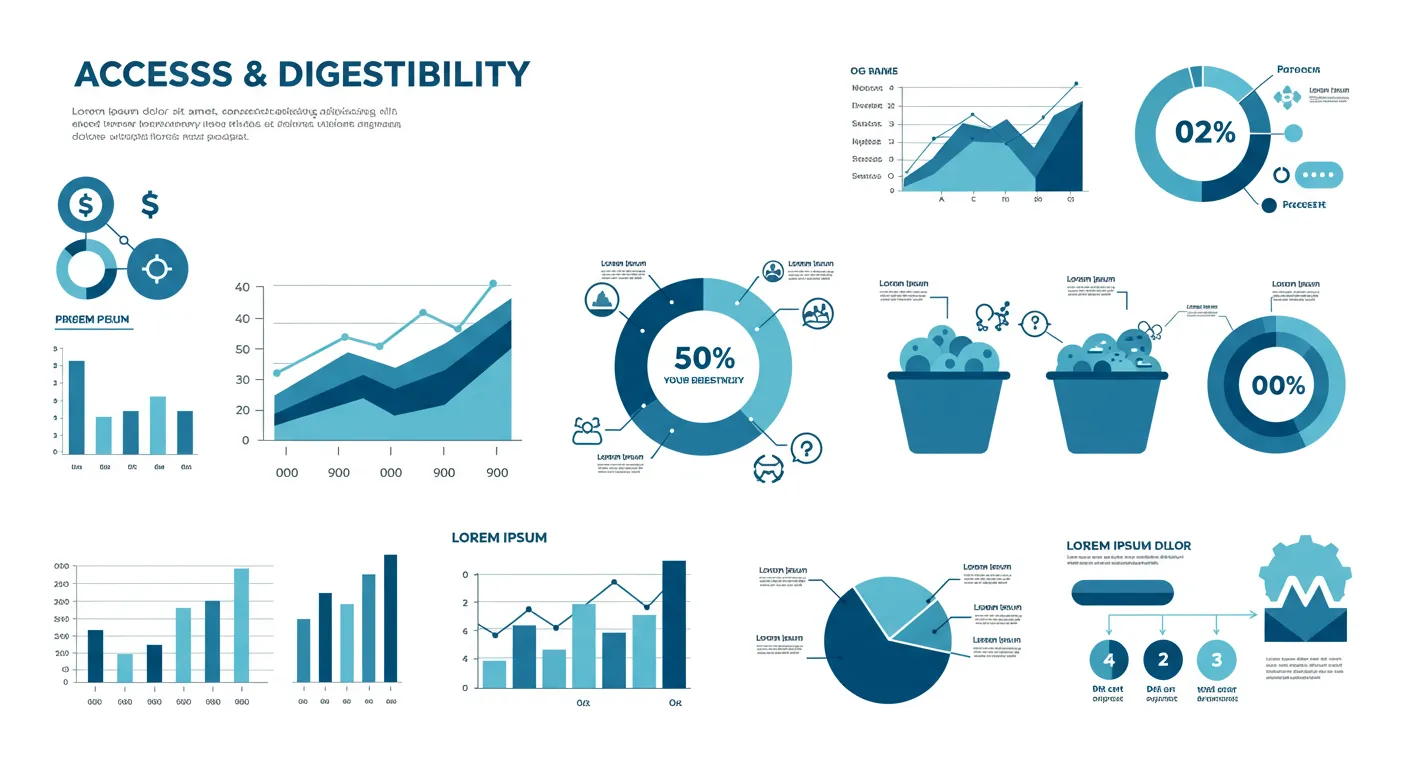
True implementation of these concepts is a significant financial commitment. Let’s break down the real “cost” of leveraging these insights for a mid-sized brokerage (50-100 agents).
| Cost Category | Estimated Annual Cost (Low End) | Estimated Annual Cost (High End) | Description |
|---|---|---|---|
| AI Software & Licensing | $15,000 | $50,000+ | Cost for enterprise-level AI tools for marketing, CRM, and transaction management. This is not just a ChatGPT Plus subscription. |
| Data Infrastructure & Integration | $10,000 | $40,000 | Cost to clean, structure, and integrate your CRM, MLS, and transaction data so AI can actually use it effectively. Often involves hiring consultants. |
| Training & Change Management | $5,000 | $25,000 | Budget for training agents and staff on new workflows, plus the productivity dip during the transition. Agent adoption is the biggest hurdle. |
| Compliance & Legal Review | $5,000 | $20,000 | Ensuring AI-generated content meets fair housing, advertising, and state licensing laws. This is a recurring cost. |
| Total Estimated Annual Cost | $35,000 | $135,000+ | The real price of operationalizing McKinsey’s strategic vision for a mid-sized firm. |
Real Estate Use Cases
The report is strategic, so let’s get tactical. How does a real estate professional actually use these ideas? It’s about applying AI to specific, time-consuming tasks.
For the Individual Agent:
- Listing Generation: Use an AI tool to turn a fact sheet (4 bed, 3 bath, granite counters, etc.) into five different listing descriptions: one luxury, one family-focused, one short and punchy for social media, one for the MLS, and one optimized for SEO. Time saved: 45 minutes per listing.
- Content Marketing: Ask an AI to create a 12-month content calendar for your blog and social media based on local market trends and seasonal homeowner concerns. Then, have it draft the posts. Time saved: 10-15 hours per month.
- Client Communication: Use AI long inspection reports into a bulleted list of key concerns for your clients. Or, use it to draft a difficult email to the other agent about a negotiation point. Time saved: 20 minutes per transaction.
For the Brokerage Owner:
- Automated Compliance: Implement an AI system that scans all agent-generated marketing materials (social posts, flyers) for potential compliance violations like missing brokerage info or fair housing trigger words. This reduces brokerage liability significantly.
- Intelligent Lead Routing: Use an AI model that routes incoming leads not just based on zip code, but on the agent’s recent success rate with that lead type, their current workload, and their communication style. This maximizes conversion probability.
- On-Demand Training: Create a brokerage-specific AI chatbot trained on your policies, procedures, and local market data. New agents can ask it questions 24/7 (“What is our E&O policy limit?” “What are the standard condo fees in this building?”) instead of relying on a mentor.
For the Property Manager:
- Predictive Maintenance: Feed historical maintenance data (e.g., HVAC repairs, plumbing issues) into an AI model to predict when assets are likely to fail. This allows for proactive replacement, reducing emergency calls and costs.
- Lease Summarization: Use AI to instantly summarize a 40-page commercial lease into a one-page brief highlighting key dates, responsibilities, and non-standard clauses. This is a massive time-saver for due diligence. As we see in emerging markets for tech, such as those discussed in the Ai Tools for Real Estate Canada Halifax — What You Need to Know in 2026 guide, local expertise combined with technology is key.
Understanding these use cases is the first step. The next is to explore the tools that enable them. For agents in specific Canadian markets, guides like the Ai Tools for Canadian Real Estate Halifax Nova Scotia: Complete 2026 Guide provide a more localized view. The landscape is evolving quickly, and staying informed through resources like the is non-negotiable for brokers who want to stay competitive.
What Real Users Are Saying
Since this is a report, not software, “user” feedback comes from industry analysts, tech executives, and economists reacting to the findings. I’ve synthesized commentary from financial news, tech blogs, and LinkedIn discussions.
Many experts praise the report for being one of the first to credibly quantify the economic potential of generative AI, moving the conversation from hype to dollars and cents. A common theme is that McKinsey’s framework gives CEOs and boards the justification they need to approve large-scale AI investments.
However, there’s also a healthy dose of skepticism. Several data scientists have pointed out that the $110-$180 billion figure is a best-case scenario that assumes smooth adoption and clean data—two things rarely found in the real world, especially in real estate with its fragmented data sources like MLSs.
A recurring critique from real estate tech founders is that the report underestimates the “last mile” problem. The AI can generate a perfect marketing campaign, but an agent still needs the skill to close the deal. The report focuses heavily on automation and less on augmentation, where AI makes the agent better, not replaced.
Strengths
- Data-Driven Framework: Provides a robust, quantified argument for AI investment, which is useful for securing budget and buy-in from leadership.
- Comprehensive Scope: The analysis across 16 business functions helps a brokerage owner think holistically about their entire operation, not just marketing.
- Credibility: Coming from McKinsey, the report carries significant weight and can be a catalyst for strategic planning sessions.
- Highlights Productivity: Correctly identifies that the primary initial value of GenAI is in saving time and automating repetitive tasks, a message that resonates with overworked agents and staff.
Weaknesses
- Overly Optimistic Estimates: The financial projections assume ideal conditions and do not sufficiently account for the costs, complexities, and failures of implementation.
- Lacks Tactical Guidance: It’s all strategy, no tactics. A broker reading this will know ‘why’ but will have no idea ‘how’ or ‘with what tool’.
- Understates Data Challenges: Real estate data is notoriously messy, siloed, and governed by complex MLS rules. The report glosses over this monumental barrier.
- Corporate Focus: The language and perspective are geared towards Fortune 500 companies, requiring significant translation for the typical 50-agent brokerage.
Ease of Use: 3/10
Feature Depth: 9/10
Value for Money: 10/10
Real Estate Fit: 6/10
Overall: 7/10
FAQ
Is the McKinsey generative AI real estate value of 0-0 billion realistic for my brokerage?
Not directly. That number is a national, industry-wide projection of potential productivity gains. For your brokerage, the value is in identifying which of your specific operational bottlenecks (e.g., marketing content creation, agent onboarding, transaction paperwork) can be streamlined with AI tools. The report provides the ‘why’; you have to calculate your own ROI.
I’ve read the report. What’s the first practical step I should take?
Conduct a time audit. For one week, have your agents and admin staff track their time in 30-minute increments. Identify the top 3-5 most time-consuming, non-client-facing tasks. Research AI tools that specifically address those tasks. This data-driven approach is more effective than just buying the “hottest” AI tool.
Does the report recommend specific AI software or tools for real estate?
No, it does not. The McKinsey report is vendor-agnostic and focuses entirely on the economic impact and strategic implications. It identifies categories of tasks that can be automated (e.g., content creation, data analysis), but it leaves it to the business leader to find the specific software solutions that fit their needs and budget.
How does this report apply to a solo agent versus a large, multi-state firm?
For a solo agent, the report’s takeaways are about personal productivity. Use AI to automate marketing, manage your schedule, and handle administrative tasks to free up more time for client-facing activities. For a large firm, the report is a C-suite document about enterprise-level transformation, data infrastructure, compliance systems, and achieving economies of scale through technology.
What is the biggest risk or challenge the report highlights for real estate?
The biggest underlying challenge is workforce transformation. The report notes that 30% of work hours could be automated. This means brokerages must invest heavily in retraining agents and staff to work with AI. The risk is not that AI will replace agents, but that agents who don’t learn to use AI will be replaced by those who do. The brokerage’s role will be to facilitate that transition.
📚 Related Articles You Might Find Useful