
- Signup & Onboarding Experience
- Core Features Deep Dive
- Pricing Analysis
- Real Estate Use Cases
- What Real Users Are Saying
- Strengths
- Weaknesses
- 📚 Related Articles You Might Find Useful
- Frequently Asked Questions
- Can free AI write my property listings?
- Is free AI good enough for virtual staging?
- Are there data privacy risks with using free AI for real estate?
- What’s the best free AI tool for a new real estate agent?
- Can AI replace my real estate assistant?
The Truth About Free AI for Real Estate: A Broker’s Guide
By Alex Chen, PropTech Analyst & Former Licensed Broker
Transparency Statement: I do not receive any compensation for reviewing these tools. My analysis is based on my 9 years as a broker and my current work evaluating PropTech for real-world ROI. The goal is to cut through the hype and see what actually works in a busy brokerage.
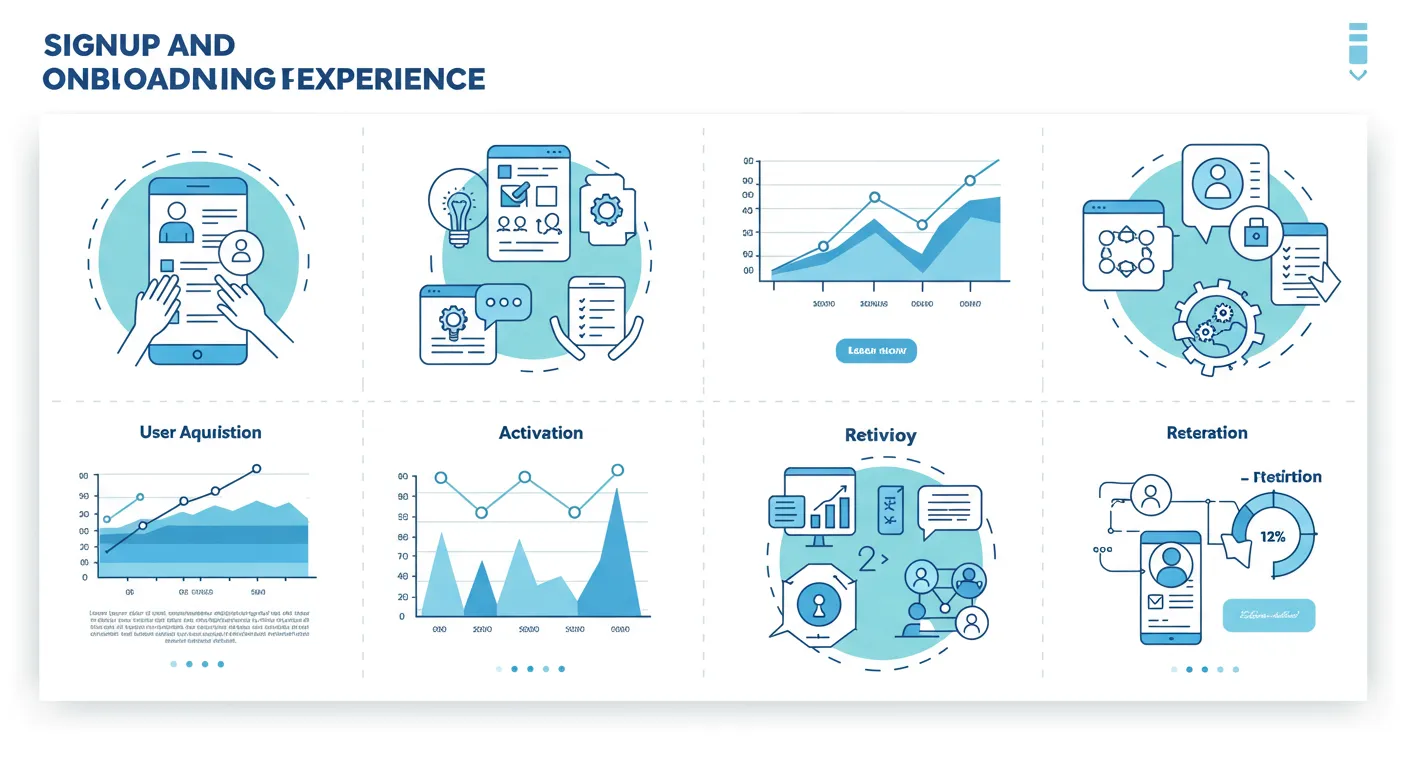
Signup & Onboarding Experience
Let’s be direct: there is no central “free AI for real estate” platform to sign up for. Your onboarding experience will be a fragmented process of creating multiple accounts on different services. I tested this by starting from scratch with the most common tools (Ai Tools for Real Estate Canada Halifax — What You Need to Know in 2026) an agent would encounter.
Signing up for OpenAI to access the free version of ChatGPT took about 3 minutes, requiring a Google account or email and phone number verification. Accessing Google’s Gemini is even faster if you already have a Gmail account; it’s practically instant. Accessing Microsoft’s Copilot (which uses OpenAI’s models) is similarly baked into the Microsoft ecosystem.
The initial setup is fast. The real time cost isn’t in the 3-minute signup. It’s in the hours you’ll spend learning the nuances of each separate platform. You have to figure out which tool is best for which task, and that “onboarding” is entirely self-directed, with a steep learning curve for non-technical users.
This piecemeal approach is the first hidden cost of “free.” You become the systems integrator, toggling between browser tabs for writing listing descriptions, generating social media ideas, and then drafting emails. There’s no unified dashboard, no central memory, and no real estate-specific workflow built-in.
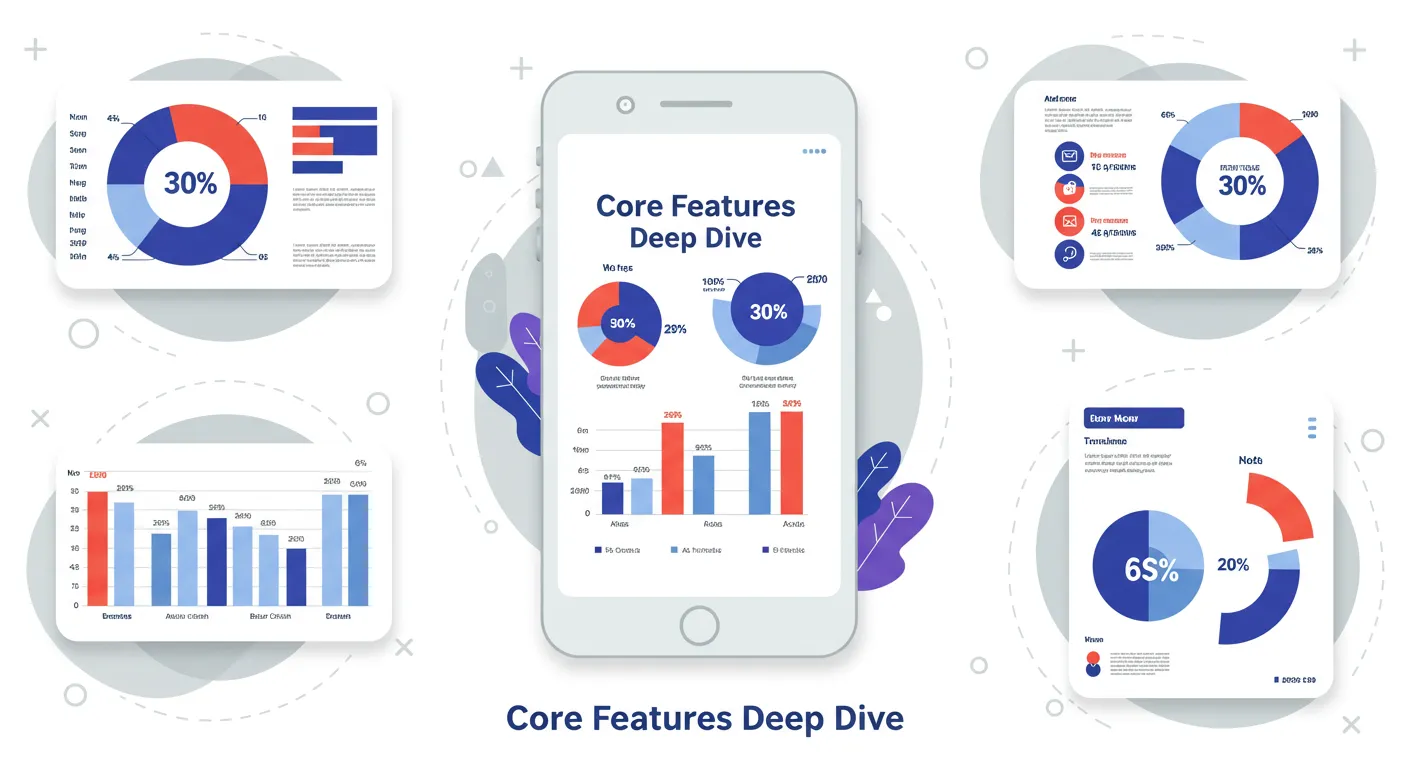
Core Features Deep Dive
“Free AI” isn’t one tool; it’s a toolbox of disconnected, generic instruments. You have to bring the expertise to make them work for real estate. We can break down the core features into what they actually do for an agent on a Tuesday afternoon.
1. Text & Content Generation (The Workhorse)
The most immediate use is content. The free versions of ChatGPT, Google Gemini, and Anthropic’s Claude are surprisingly capable. You can ask them to “Write a luxury property description for a 4-bed, 3-bath colonial with a new kitchen and a large backyard.” You’ll get a usable draft in about 15 seconds.
However, the quality is generic. It lacks local flavor and specific details that sell homes. You still need to spend 5-10 minutes editing, adding MLS-required phrases, and injecting your own market knowledge. It’s a starting point, not a finished product. It turns a 30-minute writing task into a 10-minute editing task. That’s a real, tangible saving.
2. Image Generation & Visualization (The Wildcard)
tools (Ai Tools for Real Estate in Canada Halifax: Complete 2026 Guide) like Microsoft Copilot’s Designer (using DALL-E 3) or free tiers of other image generators let you create visuals. I tested prompts like “photorealistic image of a modern farmhouse living room with a stone fireplace.” The results are often impressive but rarely usable for actual listings.
The issue is control and accuracy. The AI might add a weird chair or misinterpret the architectural style. It’s useful for creating generic social media content or blog post headers. For virtual staging, free tools are a non-starter. You can’t upload a photo of your empty listing and have it accurately staged for free; this requires specialized, paid software.
3. Data Analysis & Brainstorming (The Strategist)
This is an underutilized feature. You can paste raw text of local market data (without private info) and ask an AI key trends. For example, “Summarize these market report notes into three bullet points for a client email.” This saves time and helps you communicate value.
It’s also a powerful brainstorming partner. I tested it by asking, “Give me a 3-month content marketing plan for a new agent targeting first-time homebuyers.” The result was a solid, if generic, weekly schedule of blog topics, social media posts, and email newsletter ideas. It provides a framework that would take a human hours to build from scratch.
Pricing Analysis
The word “free” is the best marketing hook in existence. But in software, “free” always has a price. The currency is your time, your data, or your future subscription fees. Let’s break down the actual cost of using free AI in your real estate business.
The primary model is “Freemium.” A company offers a basic version for free to entice you into their ecosystem. The goal is to get you to see the value and then hit a limitation that makes upgrading feel necessary.
Here’s a typical comparison of free vs. paid tiers for a general AI model like ChatGPT:
| Feature | Free Tier (e.g., ChatGPT 3.5) | Paid Tier (e.g., ChatGPT 4.0) |
|---|---|---|
| Model Quality | Good, but less nuanced. Can be repetitive. | Excellent. More creative, better reasoning, follows complex instructions. |
| Usage Limits | Generally unlimited, but can be throttled during peak times. | Capped number of prompts (e.g., 40 every 3 hours), but higher priority access. |
| Data Input | Text only. | Text, documents (PDFs, spreadsheets), images. |
| Web Access | No (knowledge cutoff is 2022). | Yes, can browse the web for current information. |
| Data Privacy | Conversations may be used for training. | Better privacy controls, not used for training by default. |
| Cost | $0 | ~$20/month |
The real ROI calculation is this: Does the $20/month for a paid plan save you more than an hour of work? For most full-time agents, the answer is a clear yes. The ability to upload a PDF of a market report or analyze a spreadsheet of comps instantly is a massive time-saver that free versions can’t match. “Free” is for dabbling; “Paid” is for professionals who value their time.
Real Estate Use Cases
Theory is useless without application. Here is how agents can use free AI tools in their daily workflow.
Scenario 1: The New Listing Blitz
An agent just signed a new listing. They use the free ChatGPT to generate three distinct property descriptions: one focused on luxury, one on family-friendliness, and one on value. They spend 10 minutes refining their favorite one. They then ask the AI to “turn this property description into a 280-character tweet” and “write a short, engaging Facebook post” about the new listing. Total time saved: 45-60 minutes.
Scenario 2: Nurturing a Cold Lead
You have a lead in your CRM that went cold 6 months ago. You can prompt an AI: “Write a friendly, low-pressure check-in email for a potential homebuyer named John who was looking for a 3-bedroom in the Northwood area 6 months ago. Mention the market has shifted slightly and ask if his needs have changed.” This breaks through writer’s block and helps re-engage leads that might otherwise be forgotten.
Scenario 3: Hyper-Local Market Expertise
Agents operating in specific regions can leverage these tools for localized content. For instance, an agent in Eastern Canada might struggle to apply generic AI advice. However, by understanding the core functions, they can create prompts tailored to their market. This is a topic we’ve explored in our guide on Ai Tools for Real Estate Canada Halifax. The AI doesn’t know the local market, but it can structure the information you feed it.
Scenario 4: Brokerage-Level Training
A broker needs to create a new training module on handling multiple offer situations. They can use an AI to outline the key topics, draft scripts for role-playing exercises, and even create a quiz to test agent knowledge. The AI does the heavy lifting on structure, allowing the broker to focus on adding their real-world experience and legal compliance details. This approach is becoming more common, as detailed in the Ai Tools for Canadian Real Estate Halifax Nova Scotia: Complete 2026 Guide.
What Real Users Are Saying
Since “free AI for real estate” is a concept, not a product, I looked at discussions on forums like Reddit’s r/realtors and BiggerPockets. The consensus is consistent: agents are using it, but with healthy skepticism.
The most common praise is for its ability to overcome “blank page syndrome.” Agents love using ChatGPT’s free version to get a first draft of a listing description or a social media post. Many report it cuts their writing time by 50-75%, even after factoring in editing.
However, the complaints are just as common. A frequent frustration is the generic, “salesy” tone of the AI-generated text. Experienced agents find they have to heavily edit the output to make it sound authentic. There’s a shared sentiment that relying on it too much can make all your marketing sound the same.
On image generation, the feedback is almost universally negative for professional use. Agents have experimented with it for virtual staging and found the results “unrealistic” and “unusable for an MLS.” The consensus is that for client-facing visuals, professional services are still mandatory. The exploration of more advanced tools in specific markets, like in our analysis of Ai Tools for Real Estate in Canada Halifax: Complete 2026 Guide, shows that specialized, often paid, tools are required for professional results.
Strengths
- No Financial Cost: The biggest advantage is the $0 price tag, making it accessible for new agents or those on a tight budget.
- Speed for First Drafts: Instantly generates text for listings, emails, and social media, saving significant time over starting from scratch.
- Good for Brainstorming: Excellent for creating marketing plans, blog ideas, and client communication strategies.
- Easy Access: Major AI tools from Google, OpenAI, and Microsoft are readily available and easy to start using.
Weaknesses
- Generic Output: The content often lacks local nuance and the authentic voice that sells real estate. Requires heavy editing.
- Fragmented Workflow: Requires using multiple, disconnected tools with no central dashboard or real estate context.
- Data Privacy Concerns: Using the free versions means your (non-personal) input could be used to train the model. Not suitable for sensitive client info.
- Limited Capabilities: Free tiers lack advanced features like document analysis, web browsing, and high-quality image generation which are critical for serious work.
Ease of Use: 7/10
Feature Depth: 4/10
Value for Money: 9/10
Real Estate Fit: 5/10
Overall: 6.2/10
📚 Related Articles You Might Find Useful
Frequently Asked Questions
Can free AI write my property listings?
Yes, free AI like ChatGPT can write a solid first draft of a property listing in seconds. However, it will not be MLS-ready. You must review and edit it for accuracy, add local keywords and legally required information, and inject your own voice to make it compelling.
Is free AI good enough for virtual staging?
No. Free AI image generators are not suitable for professional virtual staging. They cannot accurately stage a photo of an empty room. The results are unpredictable and do not meet the quality standards for marketing a property. You still need to use specialized, paid virtual staging services for this.
Are there data privacy risks with using free AI for real estate?
Yes. You should assume that anything you type into a free AI tool could be used by the company for training purposes. Never input personally identifiable information about your clients, confidential deal terms, or any other sensitive data. Use it for general tasks, not for handling private information.
What’s the best free AI tool for a new real estate agent?
The free version of ChatGPT is the best starting point. It’s versatile, easy to use, and excels at the most common task agents need: writing. It can help with property descriptions, email drafts, social media captions, and brainstorming marketing ideas, providing immense value for a new agent’s budget.
Can AI replace my real estate assistant?
No, and it’s not even close. Free AI can automate specific, repetitive tasks that an assistant might do, like drafting initial emails or social posts. It cannot manage your calendar, talk to clients, coordinate with transaction coordinators, or handle the complex, human-centric tasks that a good assistant excels at. It’s a tool to make a great assistant even more efficient.